
It is almost time to leave. One shoe has disappeared, the bag is missing a change of clothes, and you are trying to remember whether you packed your own keys. A lighter morning does not have to begin with a perfect routine. Start by making one familiar snag easier to handle.
Find your real bottleneck
Think about the last ordinary morning that felt rushed. Where did you stop moving: choosing clothes, looking for a bag, making breakfast decisions or working out who was taking your child? Pick one specific moment. “Mornings are chaos” is hard to act on; “we spend ten minutes finding things near the door” gives you somewhere to begin.
Choose a change that fits your home and energy. If packing an entire bag feels too much tonight, put the bag and the missing item together. A small preparation you actually do is enough for this experiment.
Make one place ready
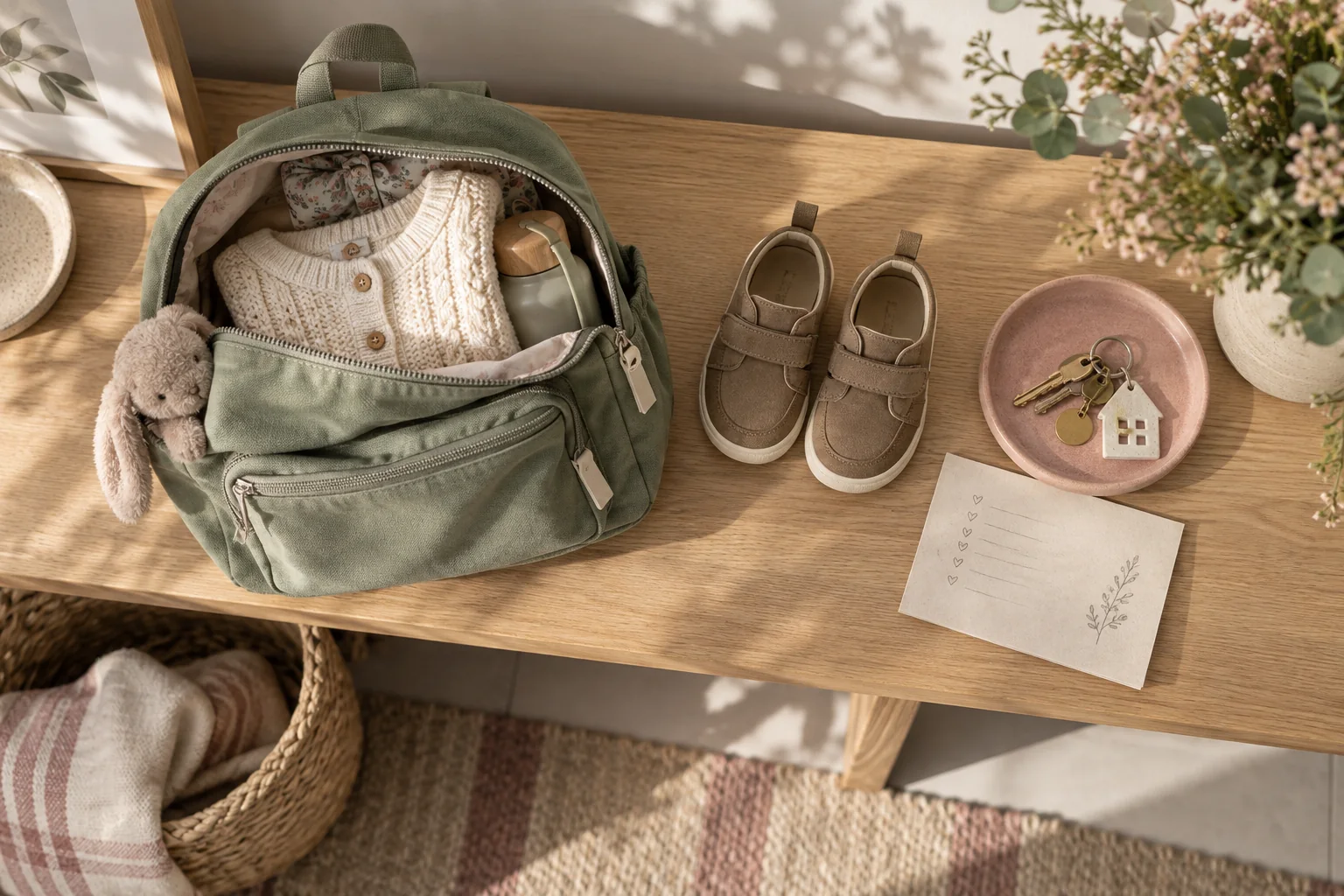
Choose a reachable place for the things you need on your way out: your bag, your child's day bag and the clothes or shoes that are always hard to find. Keep it practical rather than picture-perfect. A basket or the end of a bench can do the job.
Put a short reminder beside anything that cannot be packed yet. For example, a note reading “water bottle” can stand in for the bottle until morning. Check your child's setting for its own packing requirements; this is an organizing idea, not a universal bag list.
Give each task an owner
If another adult shares the morning, decide who owns each part before the rush begins. “Can you help?” leaves the details open. “Could you check the day bag and take it to the door before eight?” makes the handoff easier to understand.
Agree on what finished means. Does packing the bag include checking it, finding missing items and carrying it out? If you are handling mornings alone, choose one task to remove or prepare early rather than assigning yourself an even longer list.
Plan the minimum version
Decide what matters on a morning that does not go to plan. Essential belongings and getting where you need to be may take priority over tidying the kitchen or finishing an optional task. Write down one thing that can wait so you do not have to make that decision while rushing.
Build your plan around the time you actually have. You can try setting a simple “ready to leave” point before the departure time, but choose the gap yourself. The aim is a little room to respond, not another deadline to fail.
Review one morning, not your whole life
After trying the change, ask: what was easier, and what still caught us out? Keep the useful part and change just one thing for tomorrow. If the basket by the door becomes a pile, perhaps it needs fewer items rather than a more elaborate system.
You do not need a streak, an app or a complete reset to use this guide. An evening when you prepare nothing is simply an evening. Return to the smallest helpful step when you have room.
MAKE IT YOUR OWN
Your ready-to-use checklist
Choose what fits your day. Tick a step when you have considered it.
0 of 5 considered
A TWO-MINUTE EXERCISE
One small plan for today
Tomorrow we need to leave at ___. The one thing I will prepare is ___. The person responsible is ___. If we run late, ___ can wait.
My plan: _________________________________________________
Your draft and ticks stay on this page only and reset when you leave or refresh. Print to keep a copy, or save a note in your personal tools.
Open personal toolsOriginal practical planning content by MomWings. Adapt the ideas to your circumstances. This is not a clinical assessment or medical advice.
A LITTLE MORE TO EXPLORE